Trane XL18i Two-Stage Systems in Arcadia
Answer in brief: Arcadia Trane HVAC services Trane XL-series two-stage systems - the XL18i and historic XL16i - across Arcadia, CA (91006) and Lower Rancho, from Climatuff staging tuning to capacitor and charge fixes ($150 to $2,000), so call (213) 772-7221 or book online for foothill-tuned service.
Key points
- Service area: Arcadia plus Lower Rancho, Baldwin Stocker, and Peacock Village (91006, 91007, 91066).
- Two-stage Climatuff compressor that loafs on low stage through mild days and steps up to high stage when foothill heat hits.
- Communicating-capable - pairs with the XL824 ComfortLink II control, or runs conventional two-stage.
- Common repairs: dual-run capacitor, contactor, Spine Fin coil leaks, charge correction.
- The enhanced tier between the value XR single-stage and the variable-speed XV20i.
- Repair lane $150 to $2,000; replacement $5,000 to $12,000.
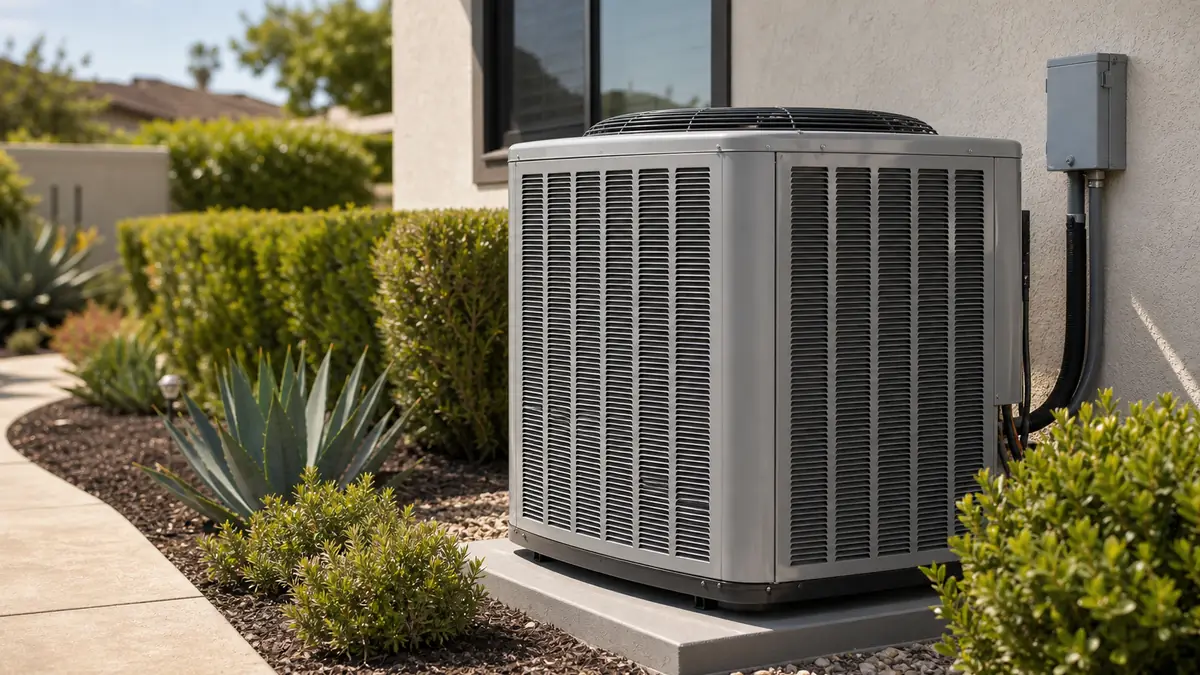
How does two-stage cooling help an Arcadia home?
A single-stage XR has exactly two settings, on at full output and off, so a mild Arcadia morning gets a quick cold blast that hits the setpoint and quits before the system ever wrings out humidity or carries cooling to the back bedrooms. Drop in an XL18i and its two-stage Climatuff loafs along on low stage the bulk of the time, climbing to high stage only when a foothill afternoon genuinely calls for it. The payoff is longer, softer cycles, more even room temperatures, and less mechanical wear - no small thing across the 45 to 65 days a year Arcadia spends above 90 F.
| Symptom | Likely cause / first check | Cost lane |
|---|---|---|
| Hums, will not start | Dual-run capacitor or pitted contactor | $150 - $450 |
| Stuck on high stage on mild days | Low charge, dirty coil, or staging signal fault | $225 - $1,500 |
| Warm air, ice on the coil | Refrigerant leak at Spine Fin coil or TXV issue | $225 - $1,500 |
| Compressor dead on a 13-year-old unit | Failed Climatuff compressor - weigh replacement | $1,200 - $3,500 |
| Comm-wired XL faults on the XL824 | ComfortLink II bus dropout or communicating board | $150 - $2,000 |
What is in the Trane XL two-stage line?
The XL family is Trane's enhanced, two-stage tier - a two-stage Climatuff compressor with an all-aluminum Spine Fin coil, sitting between the value single-stage XR (XR17, XR16, XR16 Low Profile, XR15, XR14, XR13) and the fully variable-speed XV18 and XV20i. The current two-stage flagship is the XL18i; the XL16i is the historic two-stage many Arcadia homes still run. Both come as an air conditioner and as a heat pump, and both are communicating-capable, meaning they can be wired conventionally with a two-stage 24-volt thermostat or run as a communicating system on a ComfortLink II XL824. The defining trait versus an XR is staging: a low stage that runs most of the year quietly and a high stage that engages only when a foothill afternoon actually demands it. That is the comfort and humidity-control jump people feel when they move off a single-stage unit.
What XL18i faults show up in Arcadia, and how are they read?
How the XL reports depends on how it was wired. As a conventional two-stage system there is no numeric code on the condenser - we diagnose electrically with a meter. As a communicating system on an XL824, faults surface in plain language on the touchscreen. The common field list:
- Hums, will not start - the dual-run capacitor is the top SoCal failure, then a pitted or welded contactor; a $150 to $450 fix that rides on the truck.
- Stuck on high stage on a mild day - low refrigerant charge, a dirty Spine Fin coil, an undersized return, or a failed second-stage staging signal; we check charge and static pressure before blaming the compressor.
- Warm air with coil icing - a refrigerant leak (often at the Spine Fin coil or a TXV issue) or an airflow restriction, $225 to $1,500.
- Communicating-bus alert on the XL824 - a loose terminal, a broken comm wire, or a failed board; bus first, board last.
If the unit never uses low stage, either the load genuinely needs high stage (a real 100 F day), or the staging is broken. We verify the second-stage relay or the communicating staging command, check that refrigerant charge is correct, and measure static pressure - an undersized return in an older ranch can force the system to run hard just to move enough air. Fixing the duct or charge usually restores proper staging without touching the compressor.
What does an XL18i retrofit need in an Arcadia ranch?
The XL18i is the easiest premium upgrade to land in Arcadia's older stock, but it is not plug-and-play onto 1950s ductwork. Two-stage staging only pays off if the return air can keep up at high stage, so the first step on a Lower Rancho or Baldwin Stocker ranch is a static-pressure reading - if the existing single return is choking the blower, we add return capacity before the new condenser goes in, or the system rides high stage just to move enough air. Title-24 Climate Zone 9 then puts a replacement split system on the hook for HERS refrigerant-charge and airflow verification, and any duct alteration draws duct-leakage testing. The XL18i's electrical and line-set footprint is close to the XR it usually replaces, which keeps these retrofits cleaner than a full variable-speed conversion that demands very low static pressure.
XL18i vs XR single-stage vs XV20i: how do they compare?
Think of it as three steps, not three brands. The single-stage XR (XR14, XR16, XR17) is the value workhorse: durable, cheap to repair, widely stocked - but with only an on-at-full or off setting, it overshoots and short-cycles before the far rooms catch up or the humidity comes down. Add a low stage and you get the XL18i two-stage, which holds longer, gentler runs, steadier temperatures, and a quieter house across the 45 to 65 days a year Arcadia tops 90 F. The XV20i goes further to fully variable-speed and up to about 20.5 SEER2, with the tightest comfort and the only tier that truly rewards zoning - but it costs more and demands low-static ductwork. For most older Arcadia estates the XL18i is the practical middle: most of the comfort gain, far less duct drama than a variable-speed retrofit.
Is the XL18i the right upgrade for my Arcadia house?
For most older Arcadia estates, the XL18i is the practical sweet spot - real comfort gains over single-stage without the cost and duct demands of a full variable-speed XV20i. The big mansionized rebuilds in Santa Anita Oaks usually justify the XV20i and zoning; a modest Lower Rancho ranch usually does not. We run a Manual J and a duct check first, and wire the right ComfortLink II control to match.
Common questions
What makes the Trane XL18i different from a basic XR unit?
The XL18i runs a two-stage Climatuff compressor: a low stage for mild days and a high stage for foothill heat. That gives steadier temperatures and better humidity control than a single-stage XR, which only runs full-blast or off. It is the middle tier between the value XR and the variable-speed XV20i.
Why does my XL18i run on high stage constantly in Arcadia summers?
On a 100 F Santa Ana afternoon, high stage all day can be normal - the load is real. But constant high stage on a mild day points to low refrigerant, a dirty Spine Fin coil, an undersized return, or a staging signal fault. We check charge and static pressure before assuming the compressor is the problem.
Can an XL18i use the same ComfortLink II thermostat as an XV20i?
When configured as a communicating system, yes - the XL824 ComfortLink II control manages XL two-stage staging. Some XL installs are wired conventionally with two-stage 24-volt thermostats instead. We confirm how yours is wired before recommending a control.
Is the XL18i a good replacement choice for an older Arcadia ranch?
Often it is the sweet spot. A 1950s Lower Rancho ranch rarely needs the full variable-speed XV20i, but jumps in comfort from single-stage to the XL18i two-stage, as long as the returns are sized for it. We run a load calc and check the ducts before quoting.
How long should a Trane XL18i last in Arcadia's climate?
With twice-a-year maintenance, an XL18i commonly runs 12 to 15 years here, though the foothill heat load and Santa Ana dust shorten that if the Spine Fin coil is never cleaned and the charge drifts. The compressor is the part that defines the lifespan; capacitors and contactors are wear items we expect to replace once or twice along the way at $150 to $450 each.
Does the XL18i qualify for any Arcadia rebates?
It depends on the configuration and the live program. The XL18i heat pump can qualify for SCE or LADWP electrification rebates when it replaces a gas or electric-resistance system and meets the efficiency tier, but the federal 25C tax credit ended December 31, 2025 and does not apply to 2026 installs. Always verify the current rebate amount and status before counting on it; see our SEER2 and rebate guide.